
Guide
Driving in Nepal During the Monsoon: Safety and Planning
How to plan a road trip in Nepal between June and September: landslides, road closures, vehicle choice, timing and when to hire a driver.
By DriveRentalNepal ·
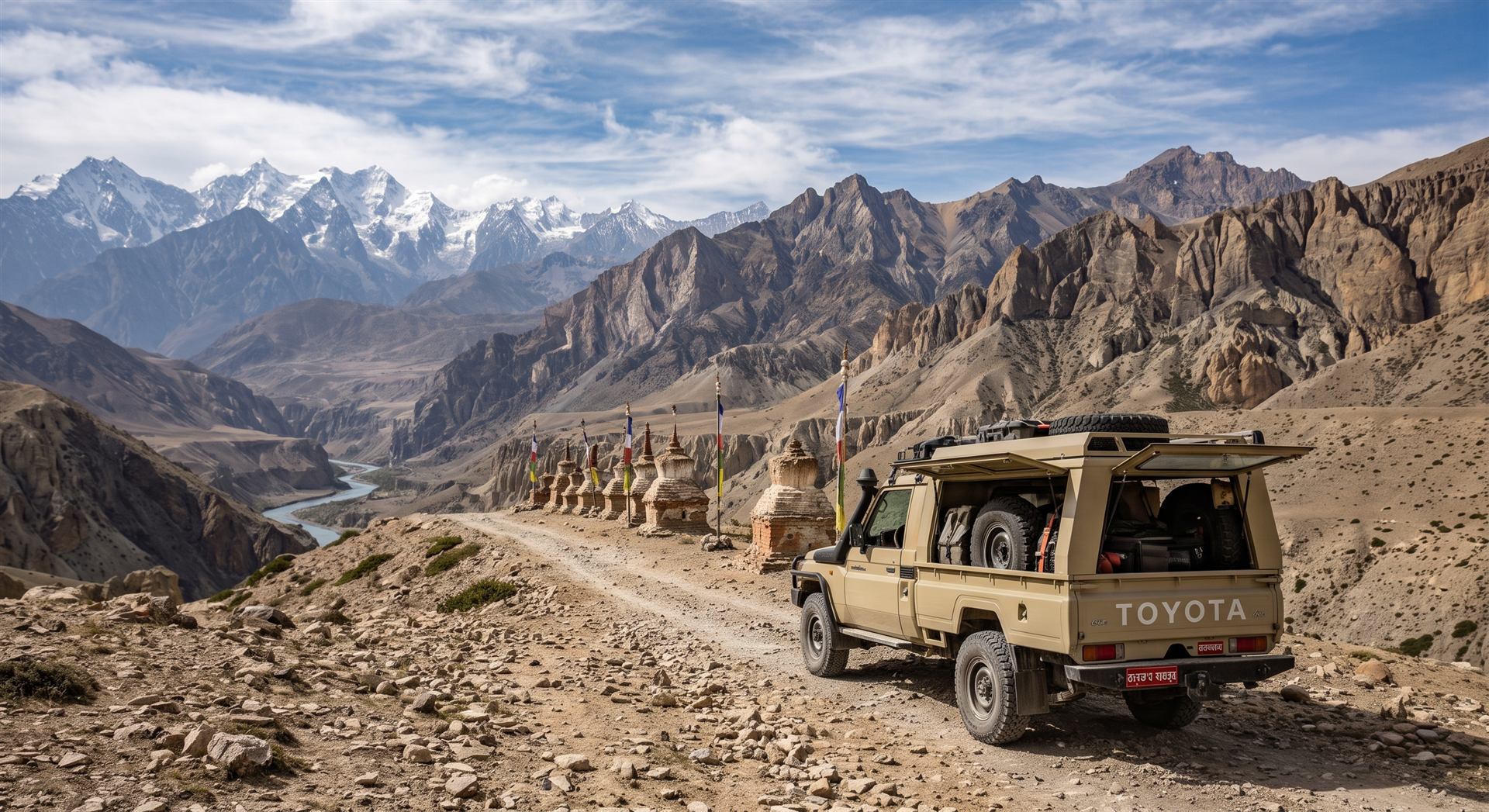
The monsoon usually arrives in June and eases by late September. It turns the hills a brilliant green and fills the rivers, but it also brings landslides, washed-out sections and long delays on the highways. Travelling by car in the rains is possible and can be beautiful. It just needs more margin.
What changes on the road
Heavy rain loosens hillsides above the highway. Landslides can block a road for hours, occasionally for a day or more, while crews clear them. Rivers rise quickly and low crossings on rural roads can become impassable. Road surfaces get muddy and slippery, especially around ongoing construction.
Plan with buffer
- Leave early, ideally just after sunrise, so you have daylight in reserve
- Do not book a flight out on the same day as a long highway drive
- Check road status the evening before and again in the morning
- Carry water and snacks in case you are held at a blockage
Choose the right vehicle
Ground clearance matters in the rains. An SUV or pickup handles mud, water and broken surfaces much better than a small sedan. For groups, a van with an experienced driver is often the most comfortable option.
Consider a driver
Local drivers hear about closures through their own networks long before they appear anywhere online, and they know which detours are passable. In the monsoon, that knowledge is worth the extra cost.
The upside
Fewer tourists, green terraces, dramatic clouds and waterfalls beside the road. If you plan for delays, a monsoon road trip can be one of the most memorable ways to see Nepal.